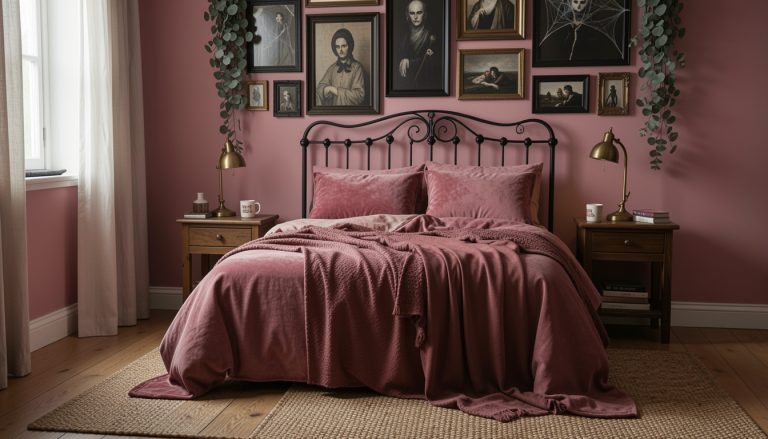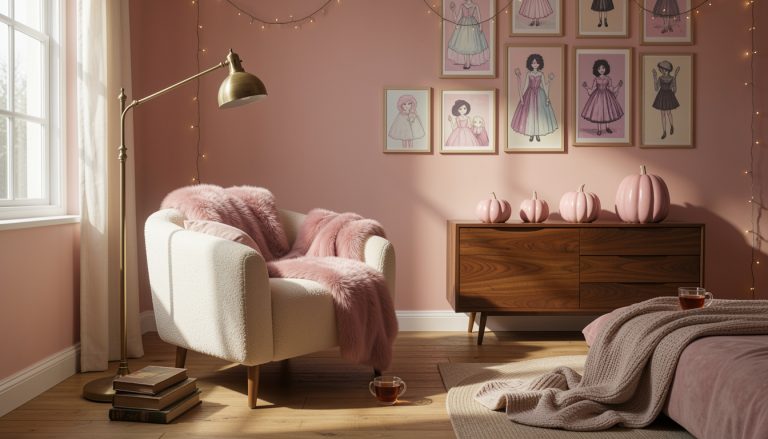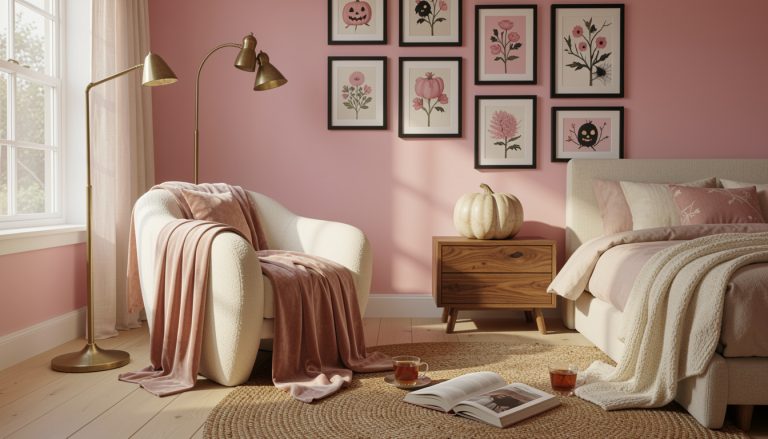





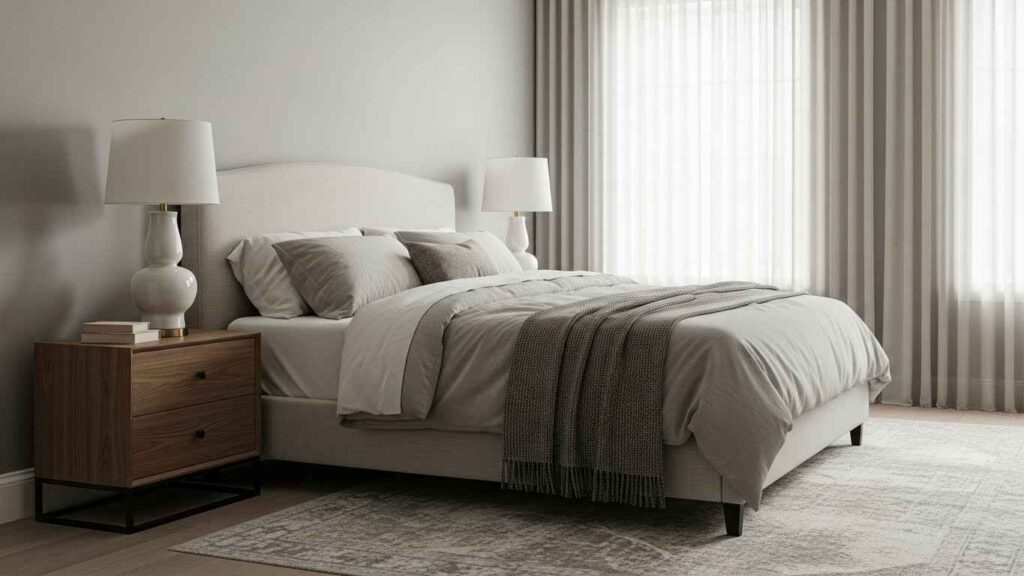

Creating a bedroom that feels both timeless and current is simpler than it seems. Transitional style mixes classic furniture shapes with modern simplicity. It avoids extremes. The result is a room that feels calm, collected, and always in style. You can achieve this look by focusing on balance, neutral colors, and a mix of textures. These ideas will help you build a serene personal space.
1. The Foundation: What is Transitional Style?

Transitional style is the middle ground between traditional and modern. It takes the warmth and detail of classic design and pairs it with the clean lines of contemporary pieces. Think of a rolled-arm sofa in a solid, neutral fabric. The goal is a room that feels inviting but not cluttered. Focus on harmony. For a budget-friendly start, paint your walls a soft, neutral tone. This creates a calm base for any furniture you add later.
2. Master the Neutral Color Palette

Neutrals form the backbone of this style. Use shades of white, beige, gray, and taupe. These colors create a peaceful background. They let your furniture and textures stand out. Layer different shades of the same color family for depth. Stick to a simple color story. A DIY tip is to mix paint samples from the same strip to create your own custom neutral. This ensures everything in the room works together seamlessly.
3. Layer Textures for Tactile Appeal

Color keeps things simple, but texture adds interest. Combine smooth, rough, soft, and nubby materials. Pair a linen duvet with a cable-knit throw. Add a velvet pillow to a leather chair. This contrast makes the room feel rich and comfortable. Mix and match materials. You can easily update your space by swapping out throw pillows and blankets with different textures each season. This is a low-cost way to refresh the room’s feel.
4. The Art of the Statement Headboard

A headboard can define your entire bedroom. Choose one with a strong shape but simple details. An upholstered headboard in a neutral fabric is a classic choice. It adds comfort and style without overpowering the room. Let the headboard be the star. For a DIY project, you can create your own using a large piece of plywood, batting, and a fabric of your choice. Attach it directly to the wall for a custom look.
5. Balance Wood Tones Throughout

You do not need to match all your wood furniture. In fact, a mix is better. The key is balance. If you have a dark wood bed, add a light wood dresser. Spread the tones around the room so it feels collected, not random. Create a cohesive mix. A budget-friendly idea is to use wood stain to adjust the color of a secondhand piece. This helps it fit better with your other furniture.
6. Choose a Sculptural Lighting Fixture

Lighting is functional art in a transitional space. Pick a fixture with a interesting shape. A modern sputnik chandelier or a drum pendant works well. It should have clean lines but feel special. This piece becomes a focal point. Opt for simple forms. You can find affordable, lookalike versions of designer lights at many home goods stores. Just make sure the scale is right for your room.
7. Blend Leggy & Upholstered Furniture

Combine pieces that show their legs with those that are fully covered. A wood-frame bed with an upholstered chair keeps the look from feeling too heavy or too light. The exposed wood legs add a touch of structure. Balance solid and airy. Look for a budget-friendly upholstered stool or bench to place at the foot of your bed. It adds that soft element without a big investment.
8. Incorporate Subtle Nod to Tradition

Add one or two classic references to ground the modern elements. This could be a traditional pattern on a pillow or a classic frame for your art. Keep it subtle. The idea is a hint, not a theme. A little goes a long way. Scour thrift stores for inexpensive, well-made frames. You can spray paint them a uniform color, like black or white, for a cohesive, modern gallery wall.
9. Anchor with a Timeless Area Rug

A rug defines the space and adds softness underfoot. Choose one with a simple geometric pattern or a solid, textured weave. Natural fibers like wool or jute are great choices. It should be large enough for the bed and nightstands to sit on it. Go big with your rug. You can often find large, neutral rugs at warehouse stores for a reasonable price. This is a key foundation piece.
10. Curate a Minimalist Gallery Wall

Avoid a crowded, eclectic gallery. Instead, use a few frames of the same style and color. Fill them with black and white photos or simple line art. Keep the spacing even. This adds personal style in a clean, organized way. Less is more. For a DIY project, you can print your own high-contrast black and white photos at home. Using identical frames from a discount store makes the display look intentional.
11. Select Sleek, Modern Nightstands

Your nightstands should offer storage without bulk. Look for designs with clean lines, perhaps with a drawer and an open shelf. Materials like wood, metal, or glass all work. Having two that match creates a sense of order. Prioritize clean silhouettes. A small, inexpensive side table from a big-box store can often work perfectly as a nightstand. Just make sure it’s the right height for your bed.
12. Elevate with High-End Bedding

Good bedding makes the bed feel like a luxury. Invest in high-thread-count cotton sheets and a quality duvet insert. The look should be crisp and tailored, not sloppy. Quality over quantity. You can mimic a high-end hotel bed by simply using ironed, white sheets and a duvet with a plain cover. Add two standard pillows and two Euro shams for a polished, layered appearance.
13. Frame the Bed for Grandeur

Give your bed a sense of place. You can do this with a tall headboard, a large piece of art hung above it, or even with floating shelves on either side. This framing makes the bed the room’s centerpiece. Create a focal point. Use budget-friendly peel-and-stick wallpaper on the wall behind your bed to create an instant, framed accent without any construction.
14. Mix Metals for a Collected Feel

Do not feel locked into one metal finish. Combining brushed nickel, matte black, and warm brass can look sophisticated. The trick is to repeat each metal at least twice in the room. This makes the mix look intentional. Repeat your metals. Update cabinet pulls and light fixtures with different metal finishes. This is a low-cost change that has a big visual effect.
15. Introduce Organic Elements

Bring the outside in to soften the room’s lines. A tall fiddle-leaf fig tree, a simple vase of fresh branches, or a bowl of natural wood beads adds life. These elements prevent the space from feeling too sterile. Add a touch of nature. A low-maintenance snake plant or ZZ plant thrives in bedroom light and requires very little water. It’s an easy way to add a living element.
16. Play with Symmetry and Balance

Symmetry is calming and is a key part of this style. Use two of the same nightstand and lamp on either side of the bed. Balance a piece of art on one wall with a similarly sized furniture piece on the opposite wall. Aim for visual equilibrium. If you have one good lamp, find a similar one at a thrift store and spray paint both the same color for a matching, balanced set.
17. Conceal Clutter with Stylish Storage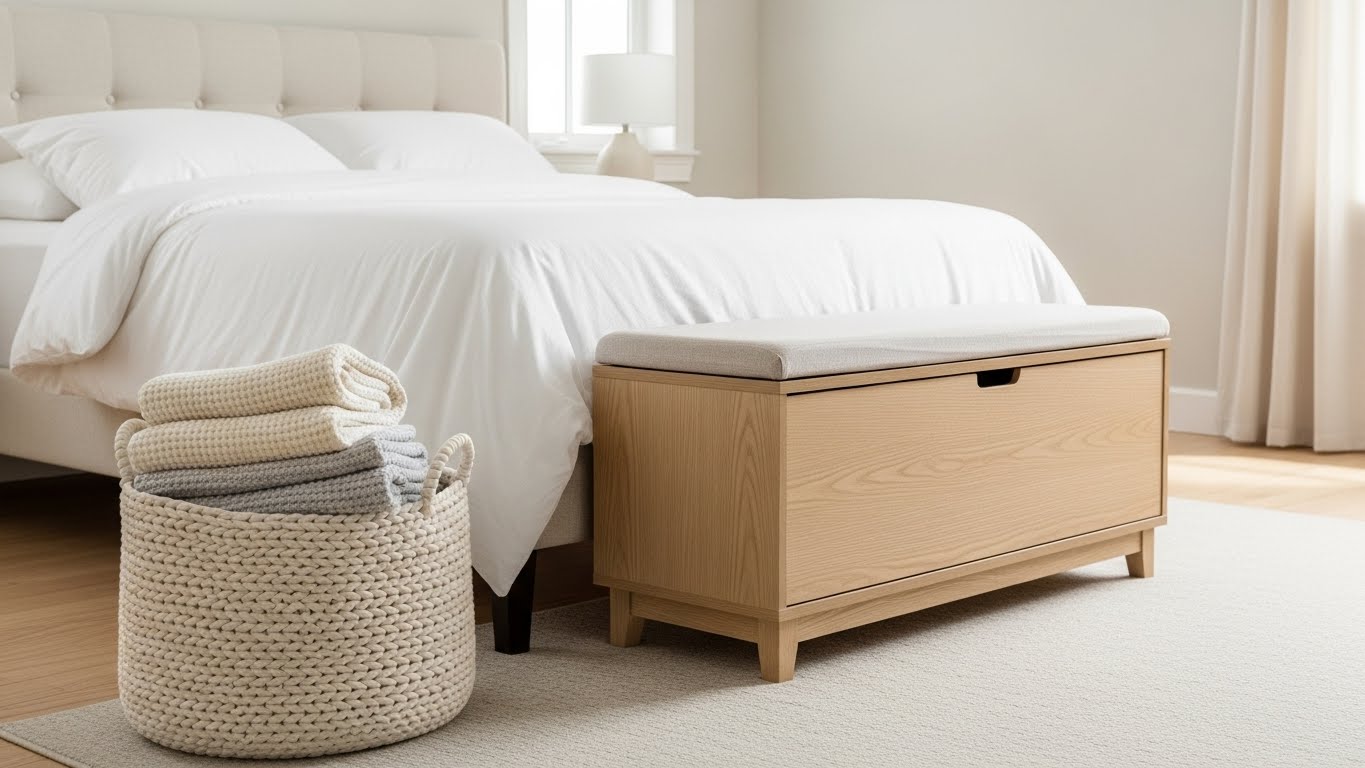

Everything should have a home. Use attractive baskets, a storage ottoman, or a dresser with drawers to hide everyday items. This maintains the clean, uncluttered aesthetic. Out of sight, out of mind. Large, inexpensive canvas bins that fit into open shelving are perfect for storing clothes, books, or other items. They keep things accessible but hidden.
18. Add a Pop of Muted Color

If you love color, use it sparingly. Choose one muted, dusty tone like sage green, blush pink, or slate blue. Use it on a couple of throw pillows or a small blanket. This adds personality without commitment. Keep it soft and subtle. Dye plain white pillowcases or a throw with a gentle fabric dye to create your own custom, muted color accents.
19. Define Spaces with a Bench or Settee

A bench at the foot of the bed is both practical and stylish. It gives you a place to sit and also helps to visually anchor the bed. Choose one with a simple, streamlined design that doesn’t block the view. Anchor your sleeping area. An affordable wooden bench can be made more comfortable with a folded blanket or a thin cushion on top.
20. Choose Curved, Soft-Line Accents

Incorporate round or oval shapes to soften the room’s architecture. A round mirror, a curved-arm floor lamp, or a circular side table does the trick. These shapes make the space feel more inviting and less rigid. Break up the straight lines. A simple round mirror is often one of the most affordable decorative items you can buy and it instantly adds softness to a wall.
21. Your Final Checklist for a Cohesive Look

Before you call the room finished, do a quick scan. Is your color palette consistent? Are wood and metal tones balanced around the room? Is there a mix of textures? Is clutter hidden? Do a final walk-through. A great tip is to take a black and white photo of your room. This helps you see the balance of light, dark, and mid-tones without the distraction of color, ensuring visual harmony.
Start with one or two changes you love. Maybe it is a new neutral paint color or a single textural throw blanket. Small, deliberate updates build over time into a room that feels both classic and completely yours. Enjoy the process of creating a space that is truly restful.