





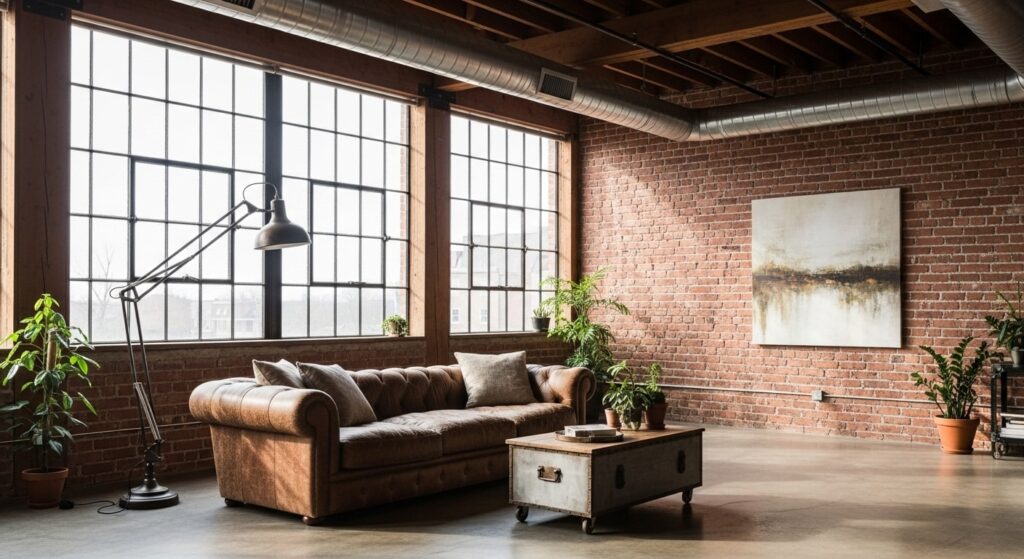

Industrial loft living rooms mix raw materials with smart design. They feel open, honest, and full of character. This style celebrates a building’s history. Think exposed brick, concrete floors, and metal details. You can create this look in any space. It is about embracing imperfections. Here are 23 ways to build your own urban retreat.
1. The Raw Brick & Beam Foundation


Raw brick and wood beams create instant character. They add texture and a sense of history. You do not need a historic building. Use brick veneer panels for a similar effect without major construction. These panels are a budget-friendly way to get the look. Leave the brick unpainted to keep the authentic feel. Pair it with simple furniture to let the walls stand out.
2. Concrete Canvas Walls & Flooring


Concrete floors and walls are durable and modern. They provide a neutral, cool base for your decor. Polished concrete is low-maintenance. For a cheaper option, consider concrete-look tile or epoxy paint. These can mimic the appearance without the cost. A large, soft rug can add warmth. This contrast makes the space feel lived-in and comfortable.
3. Steel Frame Spotlight Ceilings


Exposed steel beams define the industrial look. They add strong lines and a sense of strength. Use them to hang lighting or support mezzanines. If your space lacks real beams, faux beams made from lightweight polyurethane are a great DIY project. You can paint them a matte black for an authentic metal appearance. This adds architectural interest without structural work.
4. Reclaimed Wood Accent Wall Magic


A reclaimed wood wall brings warmth and history. The varied grains and colors tell a story. You can source old wood from barns or shipping pallets. Pallet wood is a free or low-cost material for a DIY feature wall. Sand it smooth and seal it for a finished look. This project adds a rustic element that softens harder materials like metal and concrete.
5. The Statement Metal Staircase


A metal staircase is a functional sculpture. Open treads and wire railings keep the space feeling airy. A spiral design saves floor space. For a custom look without custom prices, look for modular metal stair kits. You can assemble these yourself. Pair it with wood treads to combine materials. This becomes a major focal point in your open-plan room.
6. Oversized Factory Window Lighting


Large windows flood the space with light. They make rooms feel bigger and connect you to the outside. Factory-style windows with multiple panes are classic. If replacing windows is not possible, hang sheer, floor-to-ceiling curtains to frame your existing windows. This trick draws the eye upward and makes standard windows feel grand. Maximizing natural light is always a good idea.
7. Edison Bulb Pendant Cluster


Edison bulbs offer a warm, vintage glow. Their visible filaments are a design feature. Grouping several pendants at different heights creates visual interest. You can find affordable pendant light kits online. Use simple pipe or cord to hang them. This is an easy weekend project. The warm light makes a concrete or brick room feel much more inviting.
8. Industrial Pipe Shelving Systems


Pipe shelving is strong, customizable, and looks great. You can build it to any size. Use it for books, plants, or your media center. This is a perfect DIY project. You can find all the parts at a hardware store. The pipes screw together easily. No welding is required. Leave the wood raw or stain it to match your decor.
9. Leather & Iron Anchor Furniture


Anchor your room with sturdy, simple furniture. A leather sofa ages beautifully. Iron frames on tables and chairs add to the industrial feel. Look for secondhand pieces at flea markets or online. A vintage trunk can serve as a coffee table. These items often have the character and wear that new furniture lacks. They build a collected, personal look over time.
10. Distressed Wood Coffee Table Centerpiece


A distressed wood coffee table adds a natural, organic centerpiece. It grounds the seating area. The worn surface means you do not have to worry about spills or scratches. Build your own from salvaged wood or an old door. Sand it lightly and add hairpin legs for an instant industrial piece. This is a focal point that tells a story.
11. Exposed Ductwork as a Feature


Do not hide your ducts. Paint them a cohesive color, like matte black or silver. This turns necessary building systems into sculptural lines. It is a budget-friendly way to add architectural detail. You can do this yourself with a sprayer and the right paint. This approach celebrates the building’s functional elements as art.
12. The Urban Loft Gallery Wall


A gallery wall personalizes a large, blank wall. Use a mix of black frames for a cohesive look. Include architectural sketches, maps, or vintage photos. Thrift stores are great sources for unique frames and art. This is an easy project to start small and add to over time. It fills vertical space without making the room feel cluttered.
13. Monochromatic Metal & Concrete Palette


Sticking to a monochromatic scheme of grays, blacks, and whites creates a calm, unified space. It lets the textures of metal, concrete, and wood stand out. Use different shades of the same color family to add depth. A light gray wall with a dark gray sofa works well. This approach feels intentional and sophisticated.
14. Pops of Color in an Industrial Space


Neutral bases are perfect for bold color accents. A single bright chair, a colorful rug, or vibrant art can change the whole room. Start with one colorful piece you love. This is a low-risk way to experiment. You can always change it later. It keeps the space from feeling too cold or sterile.
15. Repurposed Factory Cart Furniture


Old factory carts are mobile and full of character. They make unique coffee tables or side tables. The casters allow you to move them easily. Search for these at architectural salvage yards. You may just need to clean it up. Adding a glass top protects the surface while showing off the cart’s details. It is a conversation piece.
16. High-Gloss Epoxy Floor Finish


An epoxy floor is extremely durable and easy to clean. The high-gloss finish reflects light, making the space feel brighter and larger. Epoxy floor kits are available for DIY application. Proper surface preparation is key. This is a great option for basements or garages converted into living spaces. It provides a modern, seamless look.
17. The Mezzanine Level Lounge


A mezzanine adds valuable square footage. It is perfect for a quiet reading nook, home office, or extra sleeping area. Use a simple ladder or a space-saving spiral staircase for access. Even a partial platform can define a new zone. This takes advantage of high ceilings, making your home feel larger and more dynamic.
18. Textile Layers for Warmth & Texture


Textiles are essential for comfort. A large, plush rug softens hard floors. Throw blankets and pillows add layers of texture. Mix materials like wool, linen, and faux fur. Look for sales on large rugs. This is the easiest way to make a raw space feel cozy and lived-in. It also helps with acoustics in a large room.
19. Industrial Chic with Velvet Touches


Velvet adds a touch of luxury and softness. A velvet sofa or armchair introduces rich color and a soft texture. It contrasts beautifully with rough brick and cold metal. Look for a single statement velvet chair instead of a full set. This keeps the look balanced. The fabric catches the light beautifully, adding depth.
20. Minimalist Loft with Maximal Impact


A minimalist approach lets the architecture speak. Choose a few high-quality, functional pieces. Keep surfaces clear and clutter-free. Edit your belongings ruthlessly. This makes a small space feel larger and a large space feel serene. Each item you keep should have a purpose or bring you joy. The impact comes from the powerful simplicity.
21. The Urban Jungle Loft Concept


Plants bring life and color into an urban setting. Large leafy plants soften hard edges and improve air quality. Choose low-maintenance varieties like snake plants or ZZ plants. Group plants together to create a mini indoor jungle. Use simple terracotta or concrete pots to maintain the industrial vibe. They make the space feel healthier and more vibrant.
22. Open-Plan Zoning with Rugs


Use rugs to define different areas in an open plan. A large rug under the sofa sets the living zone. A different rug under the dining table defines the eating area. You can use rugs of different textures or patterns to signal the change in function. This is a simple, non-permanent way to create structure without building walls.
23. Vintage Signage & Found Object Art


Vintage signs and found objects add a layer of storytelling. An old metal advertisement or a collection of gears can be art. Search flea markets for unique pieces. There is no need for these items to be expensive. Mount them on the wall like sculptures. This personalizes your space with objects that have a past life.
Start with one element you love. Maybe it is a brick veneer wall or a pipe shelf. Build your space slowly, adding pieces that have meaning. Your home should tell your story, one raw material at a time.